
Views: 0 Author: Site Editor Publish Time: 2026-10-25 Origin: Site
Material transport dictates the financial heartbeat of subterranean mining operations. The operational efficiency of your haulage directly influences the overall profitability and sustainability of the entire site. Every mining environment presents unique logistical hurdles. Navigating narrow veins, managing steep 20 percent gradients, traversing muddy terrain, and adhering to strict ventilation regulations make the selection of appropriate heavy equipment a highly complex engineering challenge.
This comprehensive guide serves as an objective resource for evaluating and selecting the optimal transport fleet for your specific site requirements. By systematically analyzing capacity needs, ensuring precise equipment matching, and evaluating the Total Cost of Ownership, mine operators can architect a safer, more productive, and economically viable extraction network.
System Synergy is Crucial: The most efficient material transport relies on the precise, mathematical pairing between your transport vehicles and loading equipment.
TCO Over Initial Price: Evaluating Total Cost of Ownership—factoring in unplanned downtime, energy consumption, and preventative maintenance—provides a far more accurate financial metric than the upfront sticker price.
Diesel vs. Electric: Battery-electric vehicles are transforming the industry by drastically reducing thermal burdens, although diesel remains a proven powerhouse for specific rugged applications.
Customization Matters: Selecting a trucking solution requires rigorous, site-specific analysis of drift dimensions, turning radii, and road gradients to prevent costly operational bottlenecks.
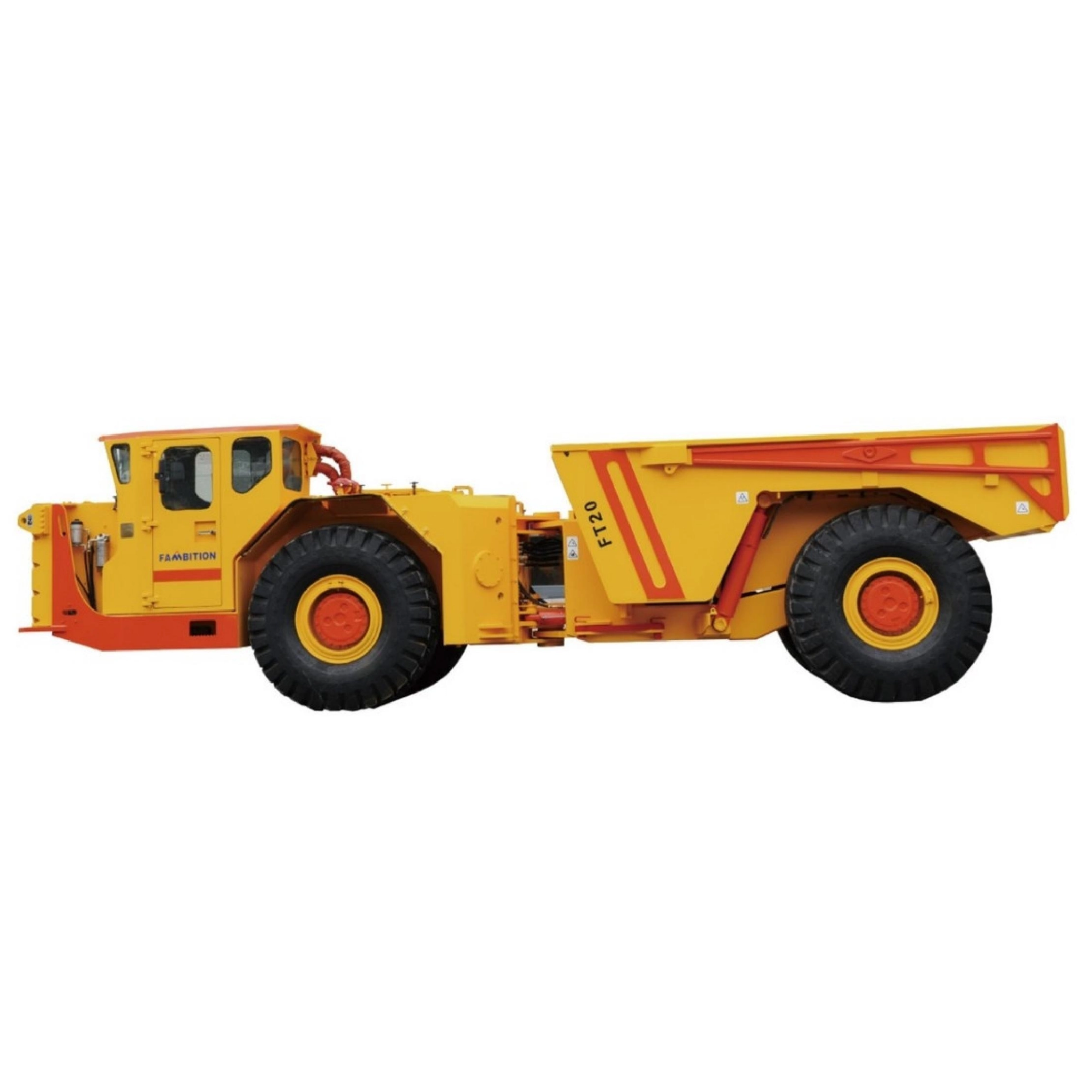
A modern underground mine haulage system is a sophisticated network comprising specialized vehicles, physical infrastructure, trained personnel, and data-tracking software. The primary objective of this ecosystem is to move fragmented ore and waste rock from the extraction face to the surface or processing facility with maximum efficiency and minimal risk. Imagine a complex, multi-level copper mine. The logistics of moving that blasted rock directly dictate the production ceiling of the entire operation.
Looking at broader industry trajectories, global mining operations are being forced deeper underground as surface deposits rapidly deplete. This shift toward deep-shaft mining brings an exponential increase in ambient temperatures and exorbitant ventilation cooling costs. Consequently, there is a massive industry pivot toward advanced fleet automation and electrification. Deep-vein projects now demand highly intelligent vehicles that haul greater payloads while generating significantly less heat and exhaust, pushing equipment manufacturers to innovate at an unprecedented pace.
Historically, many operations relied heavily on fixed rail or conveyor networks. Recently, however, there has been a significant shift toward mobile trucking. Trucks offer unmatched operational flexibility and significantly lower initial infrastructure capital requirements. Unlike fixed rail systems that demand permanent installations, trucks possess the agility to adapt to dynamic layouts. They can effortlessly navigate tough terrain and be rapidly redeployed to different production zones as the active mining face evolves.
The heartbeat of this mobile transport network relies on two primary workhorses. The first is the transport vehicle, responsible for moving heavy payloads over long distances and steep inclines. The second is the loading equipment, designed specifically for mucking and loading the fragmented rock into the transport bed. The kinematic synergy between these two machines ultimately dictates the overall cycle time and daily tonnage.
Selecting the appropriate transport vehicle requires a methodical evaluation of the physical and operational constraints of your specific site. Procurement decisions should rely on empirical engineering data rather than standard brochure specifications.
The physical geometry of the drift is the primary limiting factor in equipment selection. Drift width, roof height, and the minimum turning radius directly dictate the maximum allowable dimensions and articulation capabilities of your fleet. A vehicle scraping a ventilation duct because the swept path was miscalculated can halt production for hours. Equipment must operate with sufficient clearance to ensure safe passage, accommodate essential ducting, and prevent damage to both the chassis and the rock mass. Specifically, articulated steering designs featuring robust oscillation joints are non-negotiable for navigating the tight, unforgiving corners typical of standard 3x3 meter or 4x4 meter headings.
Payload capacity must align mathematically with your daily tonnage targets and the specific swell factor of the blasted rock. Calculating the required payload involves analyzing the total volume of material to be moved per shift against the expected cycle times. Choosing the right capacity is a delicate balancing act. Consistently overloading a vehicle accelerates component wear, increases the risk of catastrophic suspension failure, and severely compromises braking efficiency. Conversely, underloading a high-capacity machine results in sub-optimal fuel utilization and unnecessarily inflates your cost per ton.
Subterranean access ramps frequently feature muddy, uneven surfaces and steep gradients often approaching 20 percent. Safely managing these harsh conditions requires robust drivetrain power, heavy-duty chassis construction, and advanced thermal management. Vehicles must be equipped with high-torque engines capable of maintaining consistent speed while fully loaded on a severe incline. Beyond sheer power, integrated retarder systems and enclosed wet multiple-disc brakes are absolutely critical. These mechanisms dissipate heat effectively, prevent terrifying brake fade, and ensure controlled descents, safeguarding both the operator and the asset.
Even the most advanced transport fleet will underperform if it operates in isolation. The loading process is a notorious bottleneck that demands careful equipment synchronization.
In mining logistics, the golden rule of loading efficiency is pass-matching. Industry standards dictate that an underground LHD loader should ideally fill a transport bed in three to four passes. This specific volumetric ratio optimizes cycle times by minimizing the waiting period for the truck while ensuring the loader is not overworked. If it takes five or more passes, the loader is undersized, leading to expensive truck queuing. If it takes only one or two passes, the violent shock-loading can damage the truck suspension, and the loader itself is likely oversized for the drift.
The maneuverability of both machines significantly impacts cycle times within tight loading bays. Efficient loading requires precise positioning—typically utilizing V-shape or Y-shape patterns—to minimize the tramming distance between the muck pile and the vehicle. Kinematic compatibility is essential. Ensuring the loader maximum dump height comfortably clears the truck sideboards prevents dangerous material spillage. Sourcing both machines from a single manufacturer often guarantees this optimal height, bucket-to-bed compatibility, and unified hydraulic cycles, shaving critical seconds off every single load.
The propulsion technology powering your fleet carries profound implications for operational costs, mine ventilation, and environmental compliance. The transition to electrification is moving rapidly from an experimental phase to an operational necessity for many projects, though traditional power remains highly relevant.
Diesel-powered vehicles have served as the industry standard for decades. They offer proven reliability, exceptional energy density, and the raw power output necessary for traversing extremely tough terrain. Modern diesel engines have evolved significantly, incorporating advanced Tier 3 or Tier 4 technologies that drastically reduce particulate matter and nitrogen oxide emissions compared to legacy models. For remote operations with unstable electrical grids, or mature sites with already established robust ventilation infrastructure, diesel remains a highly pragmatic and cost-effective choice.
Battery-electric trucks are revolutionizing subterranean logistics primarily through massive reductions in thermal and exhaust burdens. Traditional diesel engines require vast amounts of fresh air to be pumped underground to dilute toxic fumes. By eliminating exhaust emissions entirely, BEVs allow mines to drastically decrease the volume of fresh air required, which often represents up to 40 percent of a deep mine total energy expenditure. Furthermore, electric motors generate substantially less ambient heat and operate with minimal vibration, directly contributing to improved operator safety and occupational health.
| Evaluation Criteria | Diesel Mining Trucks | Battery Electric Vehicles |
|---|---|---|
| Initial Capital Cost | Lower upfront investment | Higher upfront investment including battery packs |
| Ventilation Requirements | High airflow required for dilution | Minimal zero exhaust emissions |
| Heat & Noise Generation | High heat output, loud operation | Low heat output, quiet operation |
| Infrastructure Needs | Fuel storage and underground delivery systems | Charging stations and robust grid capacity |
Procurement managers must look beyond the initial sticker price. Minimizing the Total Cost of Ownership is paramount for ensuring long-term financial viability. Reducing TCO requires a proactive, analytical approach to fleet management.
Modern transport systems utilize advanced onboard diagnostics and telematics to monitor machine health and operator performance in real-time. By analyzing long-term log data, fleet managers can track payload distribution, fuel consumption, engine temperatures, and route efficiency. This data-driven approach allows for the immediate identification of operational bottlenecks. Correcting poor driving habits—such as excessive idling or aggressive braking—directly reduces fuel costs and prevents premature component wear.
Unplanned downtime is arguably the most expensive hidden cost in mining. Implementing a strict preventative maintenance schedule, informed by Mean Time Between Failures data, allows teams to replace components before catastrophic failures occur. When selecting equipment, evaluating the accessibility of daily maintenance points is crucial. Ground-level service points encourage operators to perform thorough daily checks. In addition, partnering with a manufacturer that boasts a robust, rapid-response supply chain ensures replacement parts are readily available, drastically reducing the duration of maintenance outages.
When architecting an optimized transport network, integrating reliable equipment engineered specifically for the rigors of subterranean environments is the foundation of success. Fambition offers a specialized range of heavy machinery designed to integrate seamlessly into high-production operations, focusing heavily on safety, durability, and operational synergy.
Fambition engineers transport vehicles that prioritize high payload-to-weight ratios and unwavering structural integrity. For example, an underground mining truck from their lineup, such as the FT20, features a 20-ton payload capacity driven by a high-performance Cummins engine and reliable Dana drivetrain components. These machines utilize heavy-duty articulated frames and Spring Applied Hydraulic Release brakes designed to navigate steep, uneven ramps safely. The intense focus on ergonomic cabin design and reinforced steel structures ensures these vehicles can withstand relentless conditions while protecting the operator and maintaining consistent cycle times.
To ensure maximum loading efficiency, Fambition LHD loaders are meticulously designed to complement their transport trucks perfectly. These loaders are engineered with optimized breakout force and bucket geometries that align flawlessly with the pass-matching rule. By utilizing equipment that is structurally and hydraulically synchronized, mine operators achieve faster mucking operations, drastically reduce material spillage, and ultimately lower their cost per ton across the entire shift.
Building an efficient material transport network is a complex engineering challenge that requires a prudent balance of payload capacity, terrain adaptability, and optimal equipment pairing. Mine operators must rigorously evaluate drift dimensions, daily production goals, and the long-term financial implications of diesel versus electric power sources to make informed procurement decisions.
The right trucking solution goes far beyond simply moving ore from the face to the surface. It actively lowers your Total Cost of Ownership, minimizes unplanned downtime, and most importantly, keeps your hardworking miners safe in hazardous conditions. By prioritizing data-driven selection and preventative maintenance, operations can achieve sustainable, long-term profitability. Evaluate your current haulage efficiency today and visit Fambition to explore industry-leading underground mining equipment tailored to maximize your site specific geological parameters and commercial ROI.
Trucks offer superior operational flexibility compared to fixed rail networks. They can handle much steeper gradients and navigate complex, constantly changing mine layouts. Furthermore, trucks do not require the expensive, permanent track infrastructure that rail systems demand, making them highly adaptable for dynamic mine plans where the active mining face frequently shifts.
Equipment matching relies on mathematically comparing the bucket volumetric capacity of the loader against the payload capacity of the truck dump box. The industry standard aims for a three-to-four pass match. This specific ratio ensures fast cycle times without causing material spillage or leaving the expensive transport vehicle idling for extended periods at the loading bay.
These vehicles are engineered with heavy-duty articulated chassis that keep all wheels planted firmly on uneven surfaces. They utilize high-torque engines paired with advanced braking systems. Features such as enclosed wet multiple-disc brakes and integrated hydraulic retarders are specifically designed to manage heavy loads safely during steep descents without experiencing brake fade.
Absolutely. Newer equipment offers significantly superior fuel or energy efficiency and much longer service intervals between overhauls. Additionally, modern vehicles feature advanced telematics that monitor machine health in real-time, allowing for predictive maintenance that stops catastrophic, highly expensive breakdowns before they occur. Over the lifespan of the machinery, these combined efficiencies drastically lower the overall operating costs.
The operational lifespan of a heavy-duty transport vehicle typically ranges from 15,000 to 20,000 engine hours, depending heavily on site conditions, gradient severity, and maintenance rigor. Implementing strict preventative maintenance schedules, utilizing OEM replacement parts, and monitoring telematics can significantly extend this lifecycle, maximizing your initial capital investment.
Drift dimensions dictate the absolute physical boundaries your equipment must operate within. The width and height of the tunnel determine the maximum dimensions of the vehicle chassis and dump box. Moreover, the minimum turning radius of the drift restricts the length and articulation angle of the truck. Selecting equipment without calculating the exact swept path can lead to severe operational bottlenecks and structural damage to both the vehicle and the mine walls.
 English


