
Views: 230 Author: Site Editor Publish Time: 2026-01-25 Origin: Site
The Core Operational Role of a Mine Utility Transport Vehicle
Why Mine Utility Transport Vehicles Are Operational Enablers, Not Just Transport
Modern mining operations depend on far more than excavation machinery alone. Productivity, safety, and cost control are increasingly shaped by how efficiently people, tools, and materials move across complex and hazardous sites. Within this context, the Mine utility transport vehicle plays a foundational role as an operational backbone rather than a secondary support asset. Designed specifically for demanding mining conditions, these vehicles bridge logistical gaps between extraction zones, maintenance areas, and workforce locations. Their purpose is not speed or comfort, but reliability, load capacity, terrain adaptability, and continuous availability under extreme conditions. Understanding the primary role of a Mine utility transport vehicle reveals why it has become indispensable in both surface and underground mining environments.
The primary role of a Mine utility transport vehicle is to provide consistent, reliable, and safe transportation of personnel, tools, materials, and auxiliary equipment within mining operations. Unlike conventional transport vehicles, it is purpose-built to function in confined spaces, unstable ground conditions, and harsh environments where downtime directly impacts output. Its role centers on enabling operational continuity—ensuring that crews reach work zones on time, critical components arrive without delay, and maintenance activities are not interrupted due to logistical bottlenecks.
A Heavy-duty Mine utility transport vehicle often acts as a mobile link between production phases, supporting drilling, blasting, hauling, and maintenance cycles. Without this vehicle class, mining operations would rely on inefficient manual transport or oversized machinery ill-suited for utility tasks. Whether configured as a Compact Mine utility transport vehicle for narrow tunnels or a High payload Mine utility transport vehicle for surface applications, its core purpose remains unchanged: reduce non-productive time while enhancing operational coordination across the mine.
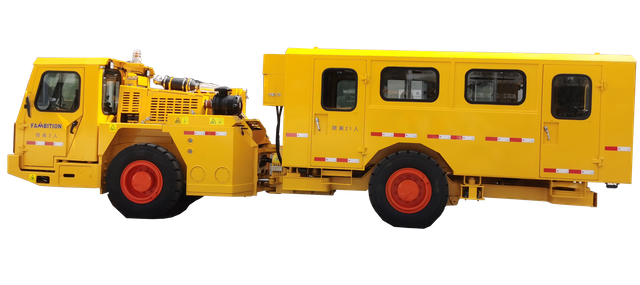
Another essential role of the Mine utility transport vehicle is improving workforce mobility while directly enhancing safety standards. In underground and remote surface mines, worker travel distance can be substantial, often involving uneven ground, steep gradients, low visibility, and airborne hazards. An All-terrain Mine utility transport vehicle ensures that personnel are transported efficiently without exposing them to unnecessary physical risk or fatigue.
From a safety perspective, these vehicles are engineered for stability, traction, and predictable handling, even when fully loaded. Enclosed or reinforced cabins, controlled entry points, and load-balanced designs reduce accident potential. A Compact Mine utility transport vehicle is especially valuable underground, where limited tunnel dimensions restrict movement. By safely transporting crews and supervisors, the vehicle minimizes foot traffic in hazardous zones and supports rapid evacuation or emergency response when required. This safety-focused mobility function is a critical part of its primary operational role.
Efficient movement of materials is central to mining productivity, and this is where the Mine utility transport vehicle demonstrates measurable value. These vehicles are designed to carry tools, spare parts, consumables, and auxiliary equipment directly to workfaces, eliminating delays caused by centralized storage access. A High payload Mine utility transport vehicle allows fewer trips while maintaining load stability, which directly improves task completion times.
The following table highlights typical utility transport functions compared to alternative methods:
| Transport Method | Load Flexibility | Terrain Adaptability | Operational Efficiency |
|---|---|---|---|
| Manual handling | Very low | Low | Poor |
| Standard road vehicle | Limited | Very limited | Low |
| Mine utility transport vehicle | High | Very high | Excellent |
By combining load versatility with mining-specific durability, the Industrial Mine utility transport vehicle becomes a critical logistical asset. Its primary role is not hauling ore but enabling every support activity that keeps extraction machinery running without interruption.
Mining environments are inherently hostile to standard vehicles. Dust, moisture, uneven rock surfaces, steep inclines, and temperature extremes demand specialized engineering. A defining role of the Mine utility transport vehicle is its ability to operate reliably where conventional vehicles fail. An All-terrain Mine utility transport vehicle is engineered with reinforced frames, high ground clearance, and suspension systems that maintain stability under uneven loads.
This adaptability ensures continuous transport capability regardless of weather, surface degradation, or tunnel conditions. In surface mines, a Gas powered Mine utility transport vehicle often delivers extended range and consistent torque, while underground environments may favor compact layouts and optimized exhaust control. The vehicle’s role here is resilience—ensuring logistics do not collapse under environmental pressure. This capability directly supports operational uptime, making terrain adaptability a core component of its primary purpose.
Payload capacity is not simply a specification; it defines how effectively a Mine utility transport vehicle fulfills its role. A High payload Mine utility transport vehicle reduces the number of transport cycles required for tools, materials, and personnel, directly improving labor efficiency and fuel utilization. This efficiency becomes especially significant in large or vertically distributed mines where travel time compounds operational delays.
At the same time, payload must be balanced with maneuverability. A Compact Mine utility transport vehicle may carry less weight but excels in restricted environments where access outweighs volume. The primary role of the vehicle is therefore optimized transport—not maximum load at all costs, but the right payload capacity for the specific mining context. This balance ensures consistent productivity without introducing safety or mobility risks.
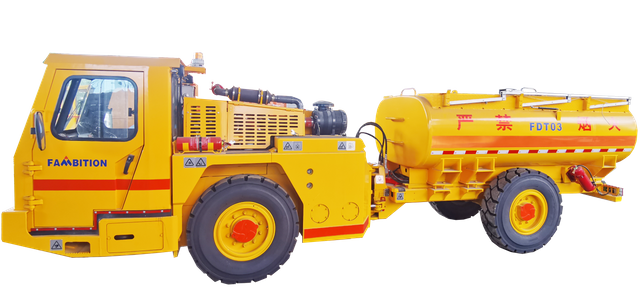
Powertrain selection directly shapes how a Mine utility transport vehicle performs its primary role. A Gas powered Mine utility transport vehicle typically offers higher torque output and extended operational range, making it suitable for large surface mines and heavy utility tasks. Its ability to operate continuously with rapid refueling supports long shifts and remote site logistics.
Conversely, other configurations prioritize reduced emissions or compact power delivery for enclosed spaces. Regardless of power source, the defining role remains unchanged: dependable utility transport under mining-specific demands. Powertrain choice enhances suitability but does not redefine the vehicle’s function. Instead, it allows the Mine utility transport vehicle to align more precisely with operational constraints while maintaining its core mission of logistical support.
It is a mistake to view the Mine utility transport vehicle as merely a means of movement. Its primary role is enabling every secondary process within the mine. Maintenance schedules, workforce deployment, safety compliance, and material availability all depend on its consistent performance. A Heavy-duty Mine utility transport vehicle acts as a force multiplier, allowing high-value machinery and skilled labor to function without unnecessary downtime.
By reducing manual handling, minimizing travel delays, and ensuring reliable access across the site, the Industrial Mine utility transport vehicle directly influences overall mine efficiency. It is not an auxiliary asset but a foundational component of operational infrastructure.
The primary role of a Mine utility transport vehicle is to ensure seamless, safe, and efficient internal logistics within mining operations. From workforce mobility and material transport to terrain adaptation and payload optimization, its function supports every stage of the mining lifecycle. Whether configured as Compact, All-terrain, Heavy-duty, Gas powered, or High payload, the vehicle’s purpose remains focused on operational continuity. In modern mining, productivity is not defined solely by extraction capacity but by how effectively supporting systems function—and the Mine utility transport vehicle stands at the center of that equation.
1.What makes a Mine utility transport vehicle different from standard vehicles?
A Mine utility transport vehicle is purpose-built for harsh environments, high loads, and restricted spaces, unlike standard road vehicles.
2.Is a Mine utility transport vehicle used for ore hauling?
No. Its primary role is transporting personnel, tools, and support materials rather than extracted ore.
3.Why is payload capacity important for mine utility vehicles?
Higher payload capacity reduces transport cycles, improving productivity and reducing operational delays.
4.Are Mine utility transport vehicles suitable for underground use?
Yes. Compact Mine utility transport vehicles are specifically designed for confined underground conditions.
5.How does terrain adaptability affect mining efficiency?
An All-terrain Mine utility transport vehicle ensures consistent logistics flow despite uneven or degraded surfaces, supporting uninterrupted operations.
 English


