
Views: 5 Author: Site Editor Publish Time: 2026-08-24 Origin: Site
Operational efficiency in underground mining relies heavily on minimizing equipment downtime. Across many global operations, localized refueling often emerges as a primary bottleneck. Moving diesel safely and swiftly to remote headings is absolutely critical to keeping the production cycle moving.
Selecting between different capacities of Underground Fuel Transporters is not just about fuel volume. It is a complex balancing act between drift dimensions, ventilation limits, and the total daily fuel consumption of your active production fleet. Getting this wrong creates severe traffic delays, ventilation overloads, or unacceptable safety hazards underground.
This guide breaks down the critical operational tradeoffs between 3,500 L and 6,000 L models. We provide a rigorous, evidence-based framework for evaluating both equipment options based on real-world constraints. By the end, you will understand exactly how to choose the transporter that aligns with your specific mine design and production targets.
Capacity vs. Agility: A 3,500 L model is optimal for narrow-vein operations and tight turning radii, reducing infrastructure modification costs.
Volume vs. Traffic: A 6,000 L model reduces the frequency of surface-to-underground refill trips, minimizing ramp traffic in high-production environments.
Fluid Dynamics Matter: Larger tank volumes introduce more significant liquid slosh dynamics, requiring careful assessment of ramp gradients and braking systems.
Decision Driver: The primary evaluation metric should be the ratio of the transporter’s payload to the shift-fuel-demand of the equipment in the specific zone it services.
Every mine operator wants maximum production output. You achieve this when heavy machinery spends more time digging and less time waiting. An optimal fuel transport system delivers fuel quickly. It requires the fewest possible trips. It should never impede primary haulage traffic or require costly drift widening.
Mine planners constantly face a sizing dilemma. Undersizing the transporter creates severe inefficiencies. A small tank forces operators into excessive return trips to the main underground storage or the surface. This dramatically increases cycle times. You pay operator wages for driving rather than actual fueling.
Conversely, oversizing the transporter brings its own operational headaches. A massive truck limits overall maneuverability. Operators risk collisions in tight drifts. Furthermore, larger tanks increase the gross vehicle weight (GVW) significantly. Heavy vehicles struggle on steep ramps and degrade road surfaces faster.
You must carefully weigh the financial impact of your choice. Factor in the hidden costs of extra operator wages required for multiple transport runs. Compare those daily operational expenses against the higher upfront capital expenditure (CapEx) of purchasing a larger, heavier machine. A well-calculated choice protects your profit margins.
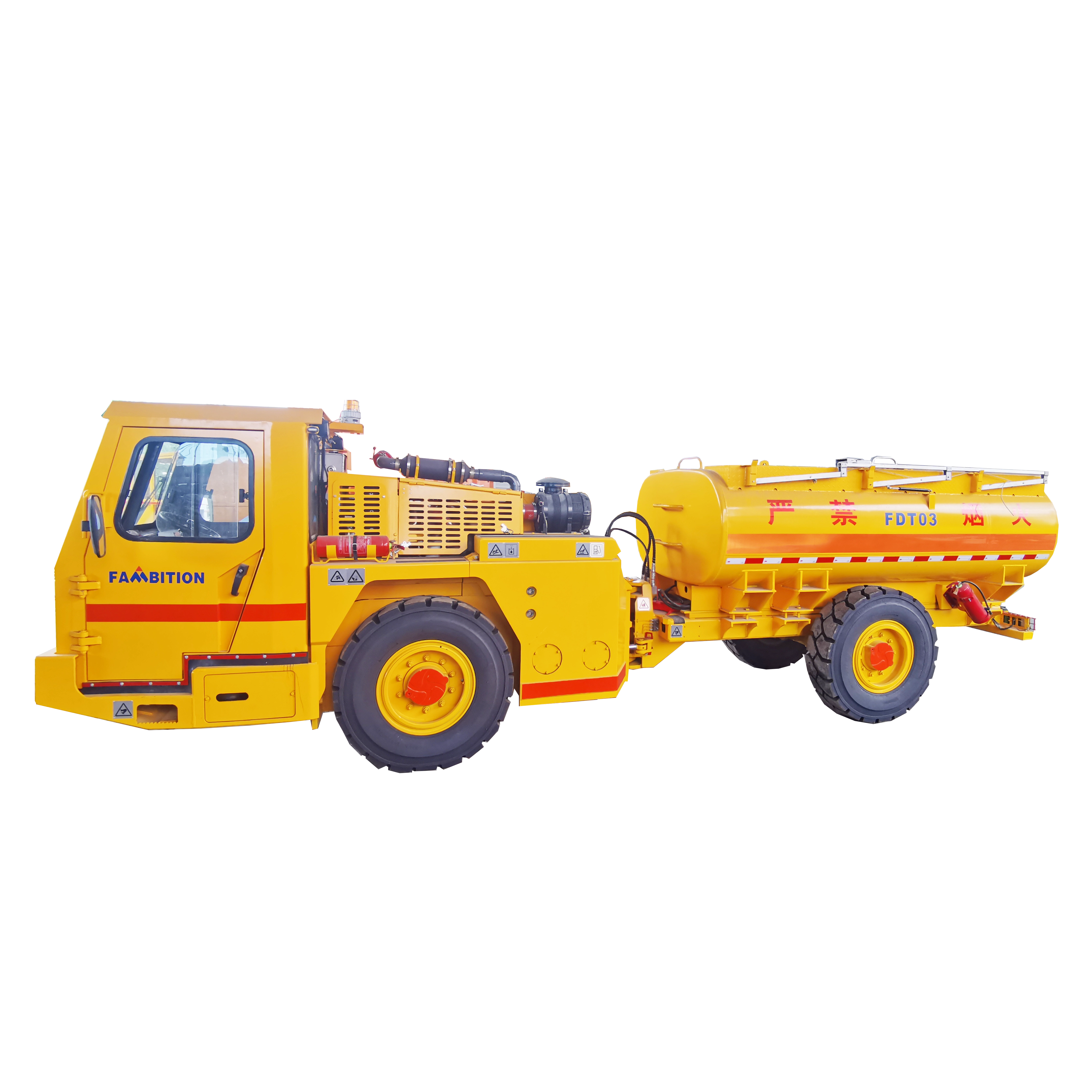
We define the 3500L mine fuel truck as a highly agile utility vehicle. Engineers design it specifically for low-profile or narrow-drift mining environments. Its compact chassis allows it to navigate tight corners easily. Operators appreciate its responsive handling in confined spaces.
Certain operational scenarios highlight the strengths of this smaller model. Best-fit scenarios include:
Narrow vein mining operations where every inch of drift clearance matters.
Early-stage development headings lacking spacious turnaround bays.
Mines enforcing strict turning radius limitations due to legacy infrastructure.
Zones utilizing smaller cross-sectional drifts (e.g., 3m x 3m profiles).
Supporting auxiliary equipment or smaller production fleets, such as two or three Load-Haul-Dump (LHD) loaders.
However, you must acknowledge its inherent limitations. A 3,500 L tank holds a restricted fuel volume. High-demand zones will drain this tank rapidly. Operators must perform more frequent refills from the main bulk storage. This constant back-and-forth movement potentially increases congestion on primary access ramps.
Best Practice: Deploy 3,500 L models in segregated development zones. Keep them away from the main haulage routes during peak mucking hours to minimize traffic conflicts.
The 6000L mine fuel truck serves a very different purpose. It is a high-capacity unit engineered for endurance. It sustains high-production, heavy-duty fleets effortlessly. A massive fuel payload ensures fewer refill cycles during a busy shift.
This larger vehicle thrives in spacious, high-output environments. Best-fit scenarios include:
Block caving and expansive sub-level open stoping operations.
Large room-and-pillar mines offering immense maneuvering space.
Mines featuring wide haulage drifts and gentle ramp gradients.
Infrastructure equipped with large intersection turnarounds.
Servicing high-burn-rate production equipment, including 60-ton haul trucks and massive drill jumbos.
Despite its efficiency, you must acknowledge the physical limitations of a larger truck. Higher GVW accelerates ramp wear. Heavily loaded tires rut soft decline surfaces quickly. The vehicle also requires exceptionally robust braking systems. Furthermore, the larger physical footprint usually restricts this truck from accessing older, narrower mine sections.
Common Mistake: Do not purchase a 6,000 L model without measuring your oldest drift choke points. A truck stuck in a corner halts all production behind it.
Physical size dictates where a truck can travel safely. You must compare the required cross-sectional area (Width x Height) against your actual drift measurements. Articulation angles also play a massive role. A truck might fit down a straight tunnel but fail to navigate a 90-degree crosscut.
The core metric here is swept path analysis. You need to calculate both inner and outer turning radius requirements. The 3,500 L chassis typically features shorter wheelbases. They articulate sharply. The 6,000 L chassis stretches longer. It sweeps a much wider path when cornering.
Understanding fuel consumption prevents operational bottlenecks. You must calculate the total shift fuel consumption of the designated zone. Sum up the hourly burn rates of every jumbo, loader, and utility vehicle working there.
Follow a proven rule of thumb. Does a 3,500 L truck require more than three trips per shift to meet demand? If so, the labor and traffic costs usually justify an upgrade. Transitioning to a 6,000 L model eliminates those extra trips. You immediately reclaim lost operator hours.
Transporting liquids underground introduces unique kinetic challenges. You must evaluate dynamic load shifting on standard 15% (1:7) mine ramps. When a vehicle descends, fluid rushes forward. This sudden weight transfer destabilizes the chassis.
Internal tank baffling is non-negotiable. 6,000 L models require far more complex internal baffles compared to 3,500 L models. Baffles break up fluid momentum. They help the truck maintain vital tire traction and braking efficacy on steep, wet declines.
Moving a heavier payload requires a larger engine. A 6,000 L transporter naturally utilizes a higher kW diesel engine than its smaller counterpart. This engine size directly impacts your mine ventilation system.
Larger engines linearly increase the required ventilation (CFM) in the drift. You need more fresh air to clear Diesel Particulate Matter (DPM) and generated heat. If your secondary ventilation cannot handle the increased CFM demand, you cannot legally operate the larger truck.
Fuel Transporter Capacity Comparison Matrix
| Evaluation Criteria | 3,500 L Transporter | 6,000 L Transporter |
|---|---|---|
| Ideal Drift Profile | Narrow / Legacy (3m x 3m) | Spacious / Modern (5m x 5m+) |
| Turning Radius (Agility) | Excellent (Short wheelbase) | Moderate (Requires wide intersections) |
| Shift Support Capacity | 2-3 Auxiliary units or LHDs | Multiple 60T Trucks & Jumbos |
| Ramp Wear Impact | Low (Lighter GVW) | High (Heavier GVW demands maintenance) |
| Ventilation Demand (CFM) | Lower (Smaller kW engine) | Higher (Larger kW engine) |
Underground fuel transport carries extreme fire risks. Both vehicles require stringent on-board fire suppression systems. Modern fleets typically utilize dual-agent ANSUL systems. These trigger automatically upon detecting abnormal heat.
However, larger fuel loads trigger different risk assessment protocols. Storing 6,000 liters of diesel underground changes your localized fire loading. You must reassess your underground parking bays and transfer stations. Ensure they feature adequate fire doors and isolation zones.
A larger tank is only efficient if you upgrade the dispensing system. Evaluate the delivery pump flow rates carefully. Standard pumps deliver around 50 Liters Per Minute (LPM). High-flow systems can push over 120 LPM.
Imagine pairing a 6,000 L tank with a slow pump. Emptying the tank takes over two hours. This completely negates the efficiency gained by fewer trips. Always specify high-volume pumps when purchasing high-capacity fluid transporters.
Drivers must understand how fluid behaves in motion. Heavier liquid loads handle very differently on declines. A fully loaded 6,000 L tank pushes the carrier vehicle hard during braking.
Transitioning operators from standard utility vehicles to high-capacity fluid transporters requires specialized training. Supervisors must train teams on proper braking techniques. Operators need strict guidance on gear selection to utilize engine braking effectively. Relying solely on service brakes causes catastrophic brake fade.
Selecting the right vehicle requires a structured approach. Follow this logical framework to align equipment capabilities with your operational realities.
Step 1 - Infrastructure Audit: Map your entire mine layout. Identify the tightest choke points and intersections. Measure your steepest ramp gradients. Finally, calculate the maximum ventilation capacities available in your intended operating zones.
Step 2 - Fleet Calculation: Audit the fuel consumption of your target production fleet. Calculate the exact fuel burn rate per 12-hour shift. This baseline number dictates exactly how many liters must move underground daily.
Step 3 - CapEx vs. OpEx Analysis: Weigh the financial metrics. The 6000L model demands a higher upfront purchase cost. Compare this CapEx against the ongoing OpEx of the 3500L model. Calculate the daily wages and fuel burned by making extra refill trips.
Next Steps: Once you complete these calculations, contact manufacturers directly. Request their full technical spec sheets. Always demand swept path diagrams for your specific drift corners. Ask for loaded gradeability charts to ensure the brakes handle your specific ramp inclines.
Neither capacity is universally superior. Your specific mining environment dictates the winner. The 3,500 L model wins decisively on agility and legacy infrastructure compatibility. It keeps narrow vein operations moving without requiring costly tunnel expansions. Conversely, the 6,000 L model wins on high-demand operational efficiency. It minimizes ramp traffic and keeps massive production fleets fueled effortlessly.
Base your final procurement decision on objective data. Rely on accurate drift measurements and verified fleet fuel burn rates. Ensure the chosen transporter aligns perfectly with your strict safety and ventilation constraints. Protect your operators, protect your infrastructure, and keep your production cycles running smoothly.
A: Standard pump dispensing rates typically range from 50 to 120 liters per minute (LPM). High-flow pumps minimize refueling downtime. Choosing a 120 LPM pump empties a large tank much faster, returning your primary production equipment to work quickly. Always match pump speed to your tank size.
A: Yes, but it requires specialized engineering. Operating on steep declines demands extensive internal tank baffling to control liquid slosh. Furthermore, the truck must utilize fully enclosed wet-disc brakes and specific drivetrain configurations. These features prevent brake fade and maintain chassis stability during heavy, downward fluid shifts.
A: Turning radius depends heavily on the specific chassis length and articulation joint angle. A 3500L truck typically features a much tighter turning radius due to a shorter wheelbase. Buyers should always request specific swept path analyses from manufacturers to ensure the vehicle clears their exact drift dimensions.
A: Yes. Many OEMs offer modular tank designs. They can engineer alternative capacities, such as 4,500 L or 5,000 L tanks. These custom sizes are ultimately restricted by the maximum payload limits of the underlying carrier chassis and your mine's specific axle-weight regulations.
 English


