
Views: 8 Author: Site Editor Publish Time: 2026-08-31 Origin: Site
Purchasing underground mining equipment demands significant capital expenditure. Selecting the wrong machine quickly leads to severe bottlenecks. You will experience excessive overbreak and face compounding maintenance headaches. You must approach this buying decision as more than a simple hardware transaction. It requires matching a specific machine precisely to your geological realities. You must consider heading profiles and life-of-mine production targets. Navigating manufacturer specifications often feels overwhelming for procurement teams. This guide cuts through brochure marketing directly. We focus squarely on the technical, operational, and financial criteria needed to specify the correct development drilling jumbo. We will explore how to align boom configurations with drift dimensions. You will learn to evaluate essential components like drifters and feeds. We highlight exactly what differentiates high-performance units from unreliable ones. By the end of this guide, you will have a clear framework. You can then make a confident, engineering-backed procurement decision.
Match the machine to the heading: Heading size, turning radius, and tramming dimensions dictate the baseline configuration before any other specs are considered.
Boom count dictates application: A single boom drilling jumbo is optimal for narrow-vein mining, whereas multi-boom rigs are mandatory for large-scale tunnel development.
Look beyond CapEx to TCO: Drifter rebuild intervals, spare parts availability, and control system complexity directly influence the Total Cost of Ownership (TCO) and long-term uptime.
Safety and automation are non-negotiable: Operator protection (FOPS/ROPS) and varying levels of drilling automation are now standard baseline requirements for modern procurement.
Establish the physical operating environment first. It acts as the primary filter for equipment selection. If you ignore physical constraints, even the most advanced machine will fail to perform.
You must accurately measure maximum face coverage requirements. Calculate the required width and height of the tunnel face. The boom must reach the entire profile easily. If operators must constantly reposition the carrier, you lose valuable cycle time. A standard drift requires precise coverage calculations. We recommend mapping out the extreme corners of your blast profile. Ensure the boom kinematically reaches these edges without stressing hydraulic cylinders.
Calculate the minimum turning radius within your existing drifts. A high-production machine is useless if it gets stuck. It must navigate tight intersections effortlessly. Measure tramming clearances carefully. Include ventilation ducts and piping in your height restrictions.
Measure the narrowest intersection width in your mine plan.
Calculate the inner and outer turning radius required.
Account for the boom overhang during transport mode.
Factor in floor gradients, as steep ramps change ground clearance.
Geology dictates your hydraulic requirements completely. We look primarily at Unconfined Compressive Strength (UCS). High UCS demands higher percussive power from the drifter. Silica content drives rock abrasiveness. Highly abrasive rock requires robust drifter internals and higher feed thrust. You must align the rock drill's output with these geological realities. This alignment maintains steady penetration rates and prevents premature drill bit failure.
Choosing your boom setup represents a massive structural decision. It determines overall agility and production volume. You cannot easily change this configuration later.
A single boom drilling jumbo fits perfectly in narrow-vein mining. We see it excel in localized development and tight tunneling operations. Its compact nature provides unmatched maneuverability underground. You benefit from a lower initial purchase price. Maintenance remains straightforward because you only service one drilling mechanism. It easily navigates sharp corners. It often fits into restrictive transport cages for shaft access.
Large-profile civil tunnels demand multiple booms. Bulk underground mining operations also rely heavily on them. You get an exponential increase in production speed. Two operators can sometimes manage three booms simultaneously using automated modes. However, you face notable trade-offs. The machine occupies a much larger footprint. It requires wider drifts for tramming. You also take on a heavier maintenance burden due to complex hydraulic routing.
| Feature | Single Boom Rigs | Multi-Boom Rigs |
|---|---|---|
| Optimal Drift Size | Under 3x3 meters | Over 4x4 meters |
| Maneuverability | Excellent in tight corners | Requires wide intersections |
| Maintenance Complexity | Low (fewer moving parts) | High (complex hydraulics) |
| Production Speed | Moderate (sequential drilling) | High (simultaneous drilling) |
Technical specifications separate high-performance rigs from frequent shop visitors. You must evaluate core mechanics rigorously. Small component failures cause massive production delays.
The drifter acts as the beating heart of the equipment. You need to evaluate impact frequency, torque, and percussive power. Match these directly to your target penetration rates. Avoid the common mistake of over-specifying drifters. Too much power in soft rock causes excessive bit wear. It also leads to severe hole deviation. Choose a kilowatt rating optimized for your specific rock strata.
You typically choose between aluminum and steel feeds. Aluminum offers lighter weight. This allows faster boom movements and reduces carrier stress. Steel provides superior durability in highly abrasive environments. Focus heavily on feed length optimization.
Balance the longest possible drill rod against heading constraints.
Longer feeds give deeper advances per round.
Shorter feeds allow navigation through tight crosscuts.
Consider telescopic feeds for variable drift sizes.
Do not ignore the chassis design. Emphasize center-articulated steering for maximum mobility. Robust heavy-duty axles handle punishing uneven floors effortlessly. You also need stable hydraulic jack configurations. The rig must remain completely rigid during drilling operations. Any chassis vibration transfers directly to the drill string. This vibration destroys drilling precision and damages internal seals.
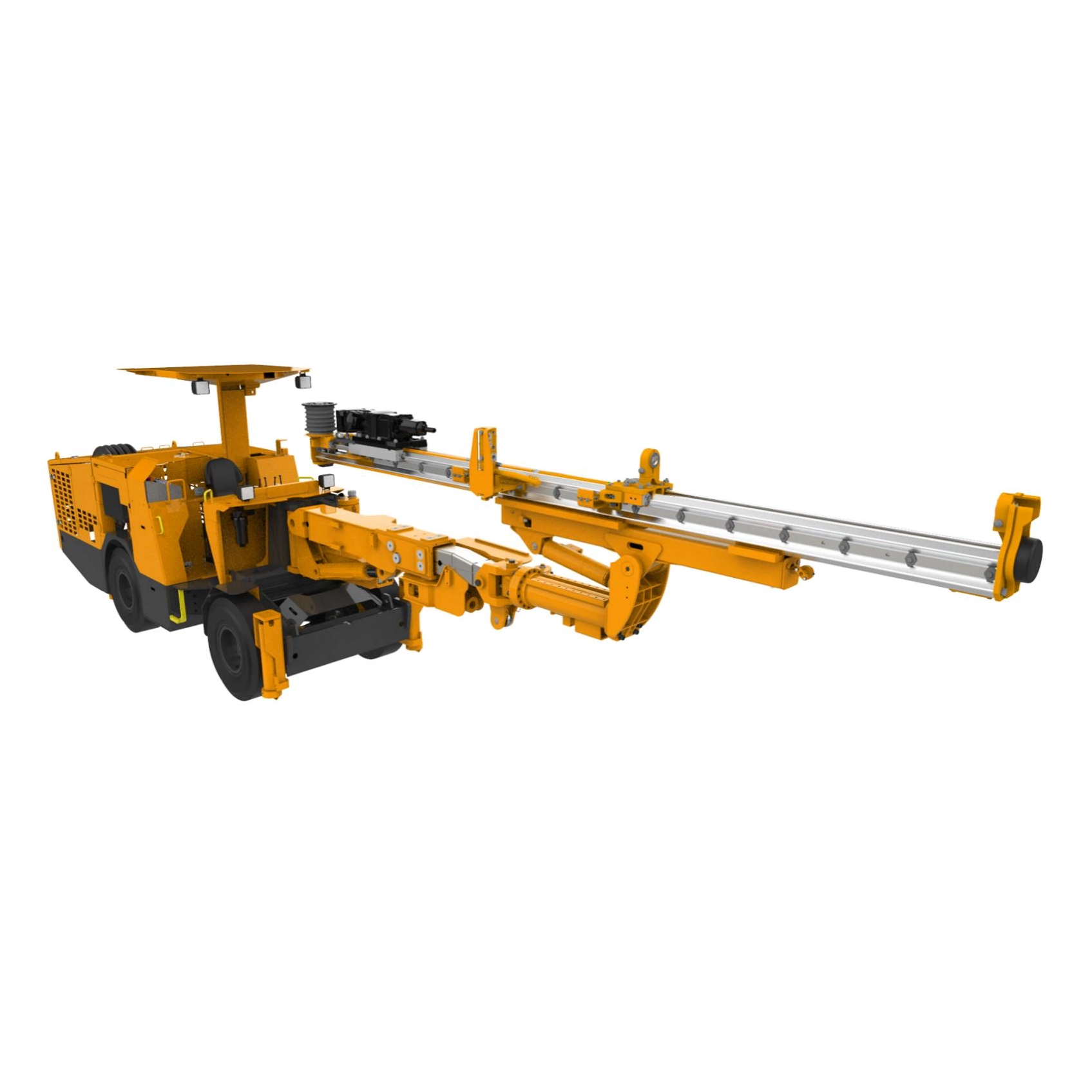
Modern regulations and operational demands require advanced controls. You must balance technological capability with practical usability. A complex system fails if operators cannot use it.
Traditional direct-hydraulic systems remain popular in remote areas. Mechanics find them much easier to troubleshoot. They tolerate dirty environments exceptionally well. Advanced electro-hydraulic systems offer vastly superior precision. They adjust drilling parameters dynamically based on rock feedback. However, they require specialized technician support. They also demand clean maintenance environments to protect sensitive sensors.
Evaluate built-in automation features carefully before purchasing. Automated hole parallel holding ensures perfect tunnel profiles. Feed-percussion synchronization extends consumable life significantly. Look for full-face drill plan software compatibility. You can upload digital drill plans directly to the rig. This eliminates operator guesswork. It vastly reduces costly overbreak and underbreak.
Operator safety remains absolutely non-negotiable. Ensure the inclusion of ISO-certified FOPS and ROPS cabins. Falling Object Protective Structures save lives daily in underground environments. Evaluate noise reduction insulation and air conditioning systems. Pay close attention to vibration damping. Operator fatigue actively destroys productivity. A comfortable operator drills more meters per shift safely. They also make fewer costly errors.
Deploying complex machinery brings hidden operational realities. You must plan for lifecycle management and deployment hurdles. Poor planning destroys operational efficiency.
Mechanics need easy access to daily service points. Assess the layout of hydraulic valves and electrical cabinets. Ground-level serviceability prevents falls. It speeds up routine checks dramatically. If mechanics must climb over moving parts, routine maintenance will inevitably suffer. Well-designed rigs cluster service points together for fast shift changes.
Factor in the expected lifespan of drifter seals. Internal components wear out predictably based on impact hours. Frame your maintenance schedules around standard operating hours before mandatory rebuilds. Proactive rebuilds prevent catastrophic mid-shift failures. Track your percussion hours diligently. Operating with worn seals allows water into the hydraulic system, causing massive damage.
Implementing highly automated equipment requires extensive workforce training. Operators face a steep learning curve initially. High-tech rigs often fail to deliver production goals if crews reject the technology. Operators might bypass automated systems for familiar manual controls. Invest heavily in simulator training. Mandate vendor-led orientations before the machine ever goes underground.
The most advanced machine fails if spare parts remain weeks away. Evaluate OEM service level agreements thoroughly. Check their local parts stockpiles and warehouse proximity. Assess their remote diagnostic capabilities. Strong supply chains guarantee continuous production. You should review the underground face drilling rig specifications and maintenance manuals provided by your vendor to ensure they meet your local support requirements.
Choosing the right development drilling jumbo requires careful balancing. You must weigh rock conditions against tunnel dimensions and technological readiness. Start by narrowing your field based on footprint. Carrier size and boom count dictate basic compatibility. Next, scrutinize drifter capabilities to match your rock hardness. Finally, validate local vendor support and spare parts availability. We strongly encourage buyers to request a customized site assessment. Have engineering teams analyze your drift profiles before releasing an RFP. Proper upfront evaluation guarantees higher productivity. It ensures safer headings and predictable advance rates over the life of your mine.
A: Jumbos handle horizontal face advancement and tunneling. They drill parallel holes into the face to extend the drift forward. Long hole drill rigs manage vertical or fan-pattern production drilling. We use them primarily in stopes to blast large volumes of ore from above or below.
A: It proves ideal for drifts typically under 3x3 meters. Narrow-vein extraction relies on them heavily. They also fit operations where extreme mobility and quick setup outweigh the need for sheer drilling volume.
A: Focus on the reduction of overbreak and underbreak. Automated rigs follow digital plans precisely, optimizing explosive usage. You also see longer consumable life due to optimized feed pressure. While upfront CapEx and technician training costs increase, the reduction in operator error quickly offsets them.
A: Industry baselines suggest minor seal replacements around 400 to 600 percussion hours. Major overhauls typically occur between 1,200 and 1,500 hours. However, local rock abrasiveness heavily skews these numbers. Highly abrasive conditions can easily cut these intervals in half.
 English


